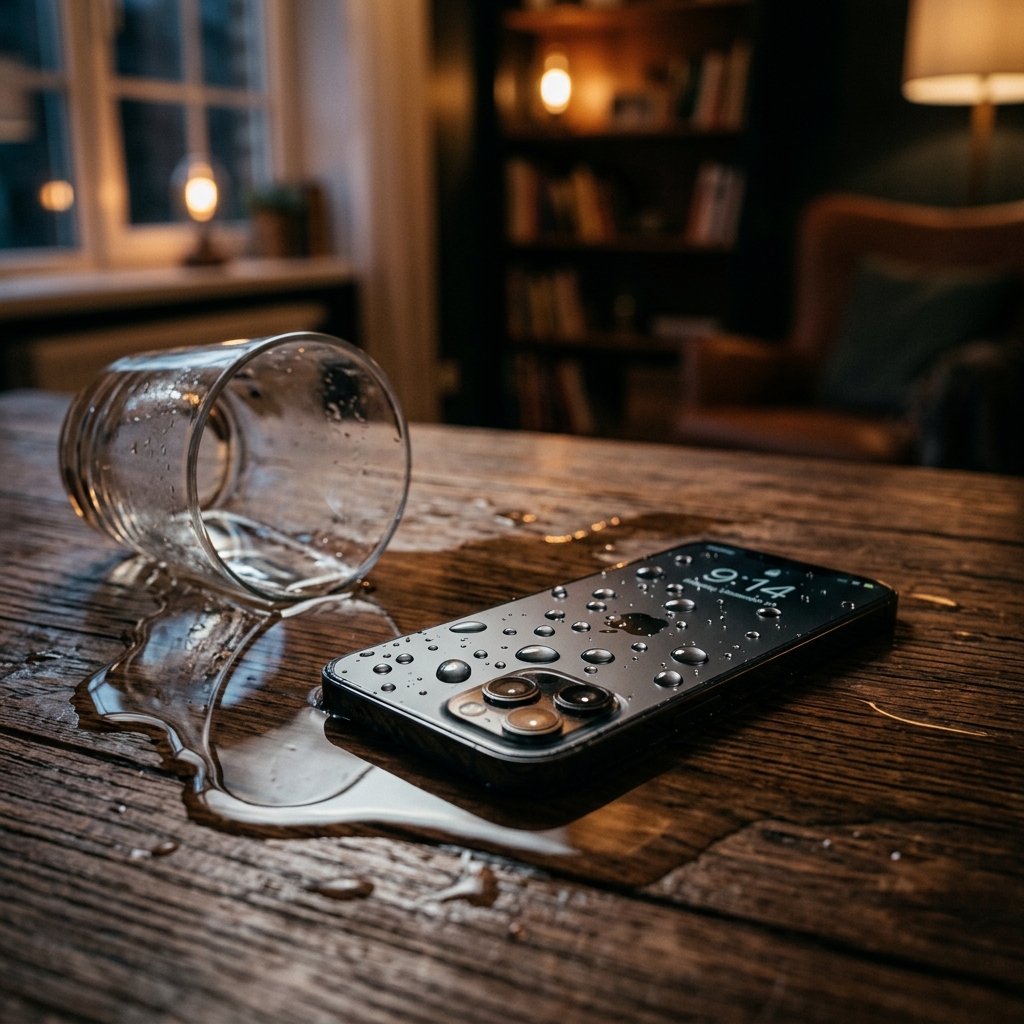
It is a moment of pure panic. You reach for a towel, bump the counter, and suddenly—splash. You've dropped phone in toilet, the kitchen sink, or perhaps a deep puddle. Even though modern devices are highly advanced, iPhone water damage remains one of the most common tech disasters worldwide. If your phone fell in the toilet, your first instinct is probably to grab a bag of rice. Stop right there. The internet is full of well-meaning advice that could actually permanently ruin your expensive smartphone.
While newer iPhones (from the iPhone 7 onwards) feature varying degrees of water resistance, that protective seal degrades over time. A phone that survived a spill two years ago might not survive a quick dip today. Once liquid bypasses those seals or gets lodged deep within the tiny acoustic chambers of your speakers, the clock is ticking. You need to act fast, and you need to act correctly.
In this comprehensive recovery guide, we will break down the exact science of what happens when your device gets wet, why the traditional remedies are heavily flawed, and how utilizing specific sound frequencies is the most effective way to rescue your speakers and your phone.
📊
iPhone being rescued from water with sound waves visualization
1. Immediate Steps When Your iPhone Gets Wet
The first few minutes after a spill or a drop are critical. Apple's official guidelines cover the basics, but relying solely on basic tips might not be enough to prevent long-term corrosion. Here is an expanded, comprehensive checklist to minimize iPhone water damage:
- Power It Down Immediately: Do not try to check if the screen is still working or if the camera still takes photos. Turn the device off instantly to prevent short circuits across the motherboard. Electricity and water are a catastrophic mix for delicate microchips.
- Strip Away Accessories: Take off your protective case. Water can easily get trapped between the case and the phone, creating a humid micro-environment that continuously feeds moisture into the device's ports. Also, unplug any charging cables or wired headphones.
- Remove the SIM Card Tray: This is a crucial step many overlook. Ejecting the SIM card tray opens up a small channel that allows internal moisture to evaporate and lets air flow through the chassis.
- Wipe It Down Gently: Use a lint-free cloth or a microfiber towel to completely dry the exterior glass and metal frame. Avoid paper towels, as they can disintegrate when wet and leave tiny paper fibers lodged in your charging port.
- Tap It Lightly: Hold your phone with the Lightning or USB-C connector facing downward. Tap the phone gently against the palm of your hand to knock out excess liquid from the charging port and bottom speakers. Do not shake it violently, as this could force water deeper into the device.
- Let It Breathe: Leave the device in a dry area with excellent airflow. An ambient fan can help speed up evaporation, but absolutely do not use a hair dryer. The heat from a hair dryer will melt internal adhesives, damage the battery, and warp the screen.
The Do's and Don'ts of iPhone Water Recovery
| Action | Do or Don't? | Why? |
|---|---|---|
| Using a hair dryer | Don't | Intense heat damages the battery chemistry and melts internal waterproof seals. |
| Plugging in the charger | Don't | Causes immediate electrical shorts and corrodes the charging pins. |
| Blowing into the speakers | Don't | The moisture from your breath makes it worse, and the pressure pushes water deeper. |
| Leaving it in a breezy room | Do | Natural airflow is the safest way to encourage steady evaporation without heat damage. |
2. Why Rice Doesn't Work (The Scientific Explanation)
We have all heard the prevailing internet wisdom: if your phone gets wet, bury it overnight in a bowl of uncooked rice. It is the most common tech myth of the 21st century, yet it is fundamentally flawed and potentially destructive. If your phone fell in the toilet, please leave the rice in your kitchen pantry.
The Anatomy of the Rice Myth
The logic seems sound at first glance. Rice is a desiccant, meaning it absorbs moisture from its surroundings. However, rice acts far too slowly to save delicate electronics from fast-acting corrosion. In various scientific tests, phones left in open air actually dried faster than phones submerged in a bowl of rice.
More importantly, rice is dirty. Uncooked rice contains fine starch dust and small grain fragments. When you bury a wet phone in rice, these microscopic starch particles enter your phone's charging port, microphone holes, and speaker grilles. When the starch mixes with the water inside your device, it creates a sticky, glue-like paste. As this paste dries, it hardens into a cement-like substance, permanently blocking your speakers and ruining your charging port. What started as a simple water issue becomes a severe physical blockage.
Apple has finally updated their official support documents to explicitly warn users against the rice method. They state unequivocally that putting your iPhone in a bag of rice could allow small particles to damage your iPhone. If you absolutely need a desiccant, silica gel packets (the little packets that come in new shoe boxes) are significantly better and dust-free. But even silica gel doesn't solve the core problem: water held by surface tension deep inside the tiny acoustic chambers of your speakers.
📊
Comparison chart showing rice vs sound wave effectiveness
3. The Sound Frequency Solution Explained
If heat is bad, and rice is worse, how do you get the stubborn water out of the microscopic crevices of your speakers? The answer lies in physics. Specifically, the physics of low-frequency sound waves. This isn't a hack; it's an engineered solution. In fact, it is the exact same mechanical principle used by the Apple Watch's built-in "Water Lock" feature, adapted for your smartphone.
How Sound Waves Move Water
A speaker is essentially a small motor that moves a diaphragm back and forth to push air, creating the pressure waves we perceive as sound. When you play standard music, the speaker diaphragm moves in complex, erratic patterns to reproduce a wide range of frequencies. But when you play a continuous, specific low-frequency tone, something entirely different happens.
Low-frequency tones (typically in the range of 165Hz to 175Hz) cause the speaker diaphragm to make extremely large, forceful, and rhythmic movements. These deep vibrations generate significant and rapid air pressure changes within the tight, sealed confines of the speaker chamber. This intense oscillating pressure acts like an invisible piston. It physically breaks the surface tension of the trapped water droplets and violently forces the liquid out through the speaker grille.
You don't need to take your phone apart, void your warranty, or visit a repair shop. You simply use an app to play these specialized tones at maximum volume, and the phone expels the water itself. It is safe, scientifically proven, highly effective, and takes less than a minute. By combining gravity (holding the phone speaker-side down) with these acoustic pressure waves, you can clear out moisture that would otherwise sit inside the device causing corrosion.
4. Real User Recovery Stories
It sounds like magic, but the results are very real. Thousands of users have recovered their devices and restored their muffled audio using this exact acoustic method. Don't just take our word for it—read about how our own team member handled a disastrous situation in our personal account: My Phone Fell in the Toilet (And How I Saved It).
Whether it's dropping a phone in a swimming pool, knocking over a glass of water on your desk, or taking a device into a heavily steamed bathroom, the immediate symptom is almost always the same: severely muffled, distorted, or crackling audio. While air drying might eventually evaporate the water over several days (giving it plenty of time to corrode the internal metals), the sound frequency method consistently restores crisp, clear audio quality instantly.
This method isn't just for iPhones, either. It works effectively on Android devices, tablets, and even smartwatches. If you've also struggled with cleaning other audio devices without damaging them, you might be interested in our deep dive into the AirPods Cleaning Myth and why physical cleaning tools often do more harm than good. Furthermore, if you haven't dropped your phone but the audio is still terrible, check out our guide on Why Your Speakers Sound Muffled to diagnose dust and grime buildup.
5. Prevention and Maintenance Tips
The best cure for iPhone water damage is, of course, prevention. It is vital to understand that water resistance is not a permanent condition. Just because your phone was IP68 rated (meaning it can theoretically survive submersion in 6 meters of water for 30 minutes) out of the factory box doesn't mean it still holds that rating two years later.
Every time your phone suffers a minor drop, bumps into the corner of a table, or flexes in your tight jeans pocket, the internal rubber gaskets and adhesive seals weaken slightly. Over months and years, these seals degrade. Here are the top ways to protect your device long-term:
- Avoid Steam and Vapor: Steam is significantly more dangerous than liquid water. The microscopic vapor particles can easily bypass weakened water-resistant seals that would otherwise block liquid droplets. Do not take your phone into hot showers or saunas.
- Keep Grilles Clean: Keep your speaker grilles and charging port free of pocket lint and dust. Dirt trapped in the speaker acts like a sponge, holding onto environmental moisture much longer and accelerating corrosion.
- Use Dedicated Waterproofing: If you are going to the beach, out on a boat, or taking photos in the pool, do not trust the built-in seals. Always use a dedicated, physically sealed waterproof pouch or heavy-duty waterproof case.
- Rinse After Saltwater Exposure: If your phone accidentally takes a plunge in the ocean or a chlorinated pool, immediately rinse it gently with fresh, clean tap water before drying it. Salt and chlorine are highly corrosive to the exposed metal pins in your charging port.
Ready to Fix Your Muffled Speakers?
If your phone got wet and the sound is distorted, every minute counts. Don't wait for corrosion to set in and don't reach for the rice. Use the Clear Wave app to safely eject trapped water using scientific, calibrated sound frequencies. It's fast, safe, and incredibly effective.